On January 20, Pharma MeetUP event was held: "Counterfeit Medicines in Ukraine. Anti-Counterfeiting Algorithm" organized by the European Business Association (EBA) Health Care Committee and Legal Alliance Law Firm. During the meeting, the participants discussed a criminal case on manufacture of counterfeit medicines in Ukraine for sale abroad, investigated collaboratively by the Prosecutor General's Office of Ukraine (PGO) and the U.S. law enforcement agencies. In course of the searches conducted in Ukraine, some 164 items of counterfeit medicines were seized, in particular, those intended for the treatment of patients with oncological diseases, hepatitis B and C, HIV, and others. The event was attended by representatives of the PGO, public agencies, pharmaceutical companies, patient organizations and professional associations.
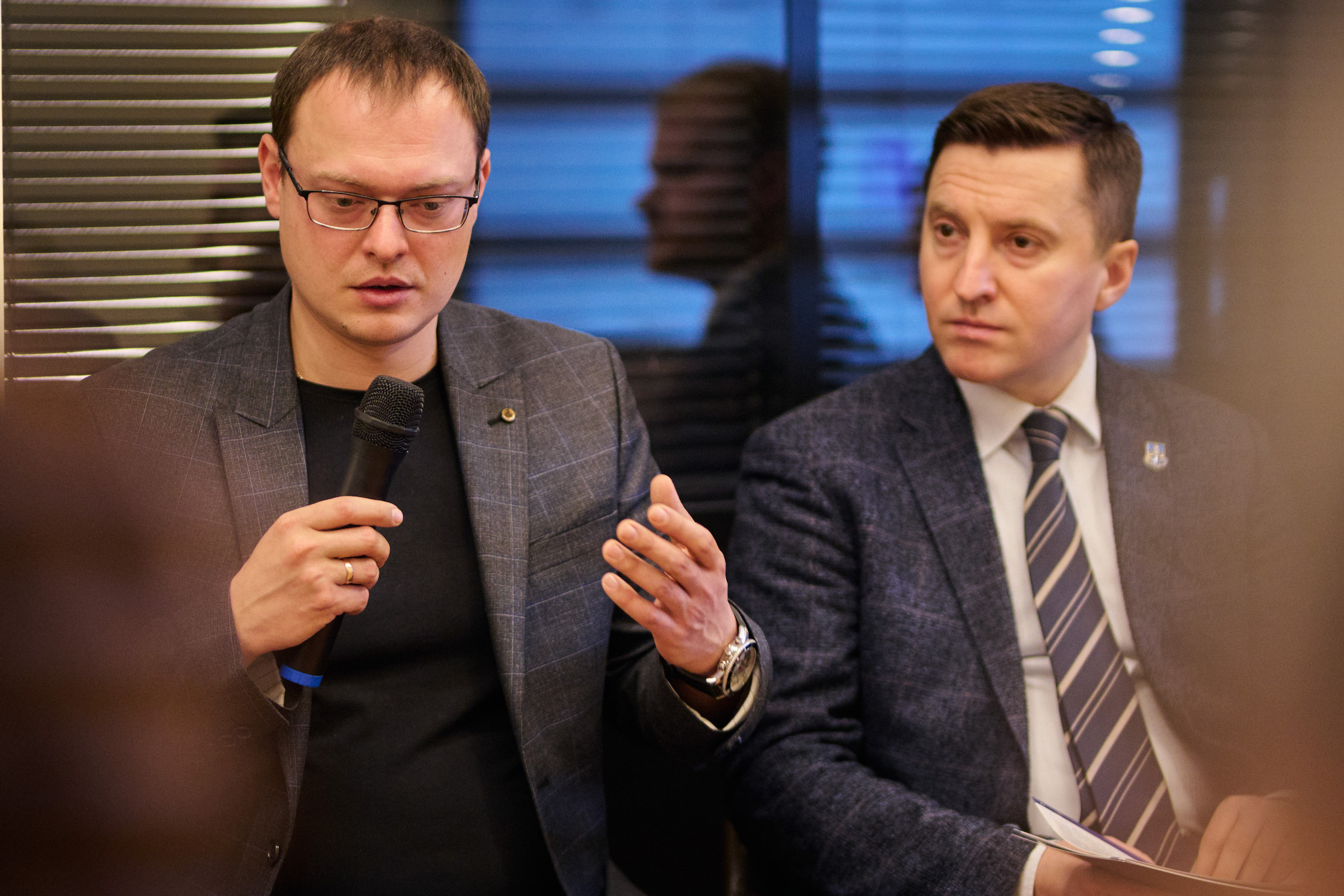
At the beginning of the event, Oleksii Boniuk, Head of the PGO Department of Criminal Law Policy and Investment Protection, said that his department was currently chosen to conduct criminal proceedings concerning counterfeit medicines.
Illya Kostin, Partner, Attorney-at-law, Patent Counsel at Legal Alliance, recalled that EBA and Legal Alliance held an event dedicated to counterfeit medicines in 2020. It was reported that an extensive scheme of counterfeiting of international pharmaceutical companies' medications and their further trafficking worldwide had been discovered in Ukraine. At that time, the unit competent for criminal proceedings on counterfeit medicines and their trafficking was not clearly determined.
Valerii Zymohliad, Prosecutor at the PGO, said the problem in conducting criminal proceedings in the pharmaceutical sector is that medicines unauthorized in Ukraine are mostly counterfeited. Such medicine is difficult to identify as counterfeit, since under the legislation in force, a medicine can be declared as counterfeited only if it is purposely marked non-identically (not respectively) to the data (one or more of them) about the medicine with the appropriate name entered in the State register of medicines of Ukraine, or it does not correspond to the data (one or more of them), including the composition, about the medicinal product with the appropriate name entered in the register.
However, pursuant to international treaties, including the Council of Europe Convention on the counterfeiting of medical products and similar crimes involving threats to public health (hereinafter referred to as the Medicrime Convention), an unauthorized medicine is also defined as a counterfeit medicine. However, although the Convention was ratified by Law of Ukraine No.4908 of June 7, 2012, its provisions were not implemented in the Ukrainian legislation.
Another problem is also that Ukraine's laboratories capable of performing an expert examination of medicines are not accredited to conduct forensic examinations, and the results of their examination are not recognized as proper evidence by the court. Therefore, counterfeiting of medicines in this criminal case could be confirmed by obtaining samples of the medicine from some pharmaceutical companies. However, due to the lack of feedback from pharmaceutical companies without representative offices in Ukraine, some of the discovered medicines have never been examined.
Hence, V. Zymohliad believes that pharmaceutical companies or relevant public organizations should establish a certain register of information on labeling of medicines, batches of medicines circulated in Ukraine, and a holder of this register must have original samples of medicines. This would facilitate the prompt investigation of possible counterfeiting.
In order to serve notice of suspicion and complete the pretrial investigation, the investigation must be acutely aware of the fact that the medicine found has been counterfeited.
Furthermore, information about the revealed facts of counterfeit medicines should be classified during the pretrial investigation. Considering that at present, when law enforcement agencies brief pharmaceutical companies about the discovery of possible counterfeiting of their medicines, they in turn inform the State Service of Ukraine on Medicines and Drugs Control (hereinafter referred to as the State Medicines Service). Then the authority shall issue an order to ban the circulation of the medicine found. This order should be made public. In this regard, the criminals are informed that the public agencies have become aware of their counterfeiting of the medicine and they change the place of manufacture, sales channels, and the like. Such actions result in the loss of the ability of law enforcement agencies to detain the criminals.
According to the speaker, there is also a need to improve communication with patients who purchase medicines outside the legitimate supply chain, since they do not keep packages, instructions for use, and it is difficult for law enforcers to identify the medicines they have purchased as counterfeit ones.
Serhiy Sur, Director of Arterium LTD, has noticed that information about labeling and packaging of authorized medicines is at the disposal of the State Medicines Service, which can promptly provide the prosecutor's office with this information. More details on the medicine can be requested from manufacturers that have information on the batch and labeling of the medicine in circulation. They can also do a laboratory test of the sample provided by the prosecutor's office, compare it with the medicine of their own manufacture, and thereby confirm or refute the fact of counterfeiting.
With respect to the fact that laboratories have to be accredited for forensic examinations in order for their results to be admitted as evidence, S. Sur said the issue was purely legal, since the State Medicines Service has laboratories that can perform relevant examinations. Therefore, the legislation should be amended so that the prosecutor's office could use the results of those laboratories' examinations in criminal proceedings.
The speaker also said the State Medicines Service in case of information that the counterfeit medicine has been found was required to issue a prohibition order on circulation of such a medicine, so that it would not enter the legitimate pharmaceutical supply chain or harm patients. Consequently, in such cases, a compromise should be reached: release information to protect patients, while not disclosing data that would be important to the completion of criminal proceedings.
S. Sur recalled that the first booklet on anti-counterfeiting and detection of counterfeit medicines was published in Ukraine in 2000 with a print run of 5,000 copies, and the second edition in 2002 with a print run of 10,000 copies. It was created on the basis of WHO and is circulated free of charge in all pharmacies as part of the national education program for pharmacists. At the same time, an information campaign to prevent counterfeit medicines was actively conducted through the media among the population. He believes that the GPO could also resume the practice and start providing information to the public.
In addition, the speaker noted that the Medicrime Convention stipulates the establishment of specialized units of a police force and educational programs on counterfeit medicines among investigators, judges to acquire knowledge of counterfeit medicine distribution, methods of preventing their trafficking, etc. Hence, the PGO should also develop an educational program in the training of judges, prosecutors, investigators, so that they have at least basic knowledge on this issue.
Moreover, according to the speaker, the Law of Ukraine "On Medicines" should be amended so that an authorized medicine also falls under the definition of a counterfeit medicine.
V. Zymohliad said the PGO interacts with the State Medicines Service, but it is limited in its authority and cannot verify non-licensees. Therefore, the State Medicines Service's experts are involved in conducting searches to provide advice.
A. Boniuk added that discussions were underway to prioritize criminal proceedings on counterfeit medicines as they related to life, health of citizens and intellectual property. In case of a positive decision, the effectiveness of preventing counterfeit medicines will significantly boost.
With regard to legislative gaps and obstacles encountered by the PGO in investigating criminal proceedings on counterfeit medicines, V. Zymohliad said that Article 3211 of the Criminal Code of Ukraine stipulates penalties in case of manufacture, acquisition, transportation, dispatch, possession for sale or sale of deliberately counterfeited medicines. However, "advance knowledge" is almost impossible to prove. For instance, if a person sells a counterfeit medicine, but the investigation does not prove that the person knew about the counterfeiting of this medicine, such a person will be subject only to administrative punishment.
A further gap in the legislation is the lack of liability of printing companies for participation in the medicine counterfeiting process, as they do not have to verify the legality of using a trademark. Therefore, the legislation should at least stipulate their obligation to verify the legitimacy of orders for printing packages or other elements for global brands and medicines. If that were the case, such companies would be recognized as accomplices in the crime.
Dmytro Lurye, Manager of the EBA Health Care Committee, drew attention to the fact that the bill "On Medicines" (registered under No. 5547), in which the definition of "counterfeit medicine" will meet European standards is pending in the Parliament for second reading. It also establishes the powers of the new regulatory agency in medicines circulation and, according to the speaker, they will focus not only on the activities of licensees but on the control of medicine circulation, including illegal, which may be exercised by every person in various ways, primarily through the Internet.
Meanwhile, bill No.5547 will not be able to resolve all problematic issues, as the amendments require both criminal, criminal procedure and administrative law. Therefore, the speaker suggested that the PGO, along with EBA, should jointly develop the necessary legislative initiatives to address gaps in the regulatory legal acts to prevent counterfeit medicines and coordinate the powers and activities of various law enforcement and regulatory agencies in this area.
V. Zymohliad agreed to this cooperation adding that the solution also required the issue of counterfeiting of medical products, which was not yet covered by national legislation.
Inna Ivanenko, Executive Director of the Patients of Ukraine charitable foundation, said that since 2001 the government has not conducted information campaigns among the population in order to protect it from counterfeit medicines. Patients also have a deep distrust of the law enforcement system. Thus, it is necessary to educate the population to know how to verify the medicine authenticity.
Valentyn Chernyshov, Market Access Manager at AbbVie Biopharmaceuticals GmbH, noted that in addition to counterfeit medicines, manufacturers of innovative medicines suffer from the so-called "grey" imports of medicines. Thus, the AbbVie company conducted its own survey, according to the outcomes of which, for certain international non-proprietary names, the share of "grey" imports to Ukraine is about 60%. In other words, companies incur substantial losses, which, in turn, reduces the budget receipts.
Vitalii Hordiyenko, Chair of the Board of the Association of Innovative Pharmaceutical Manufacturers, added that the ground for the development of "grey" imports in Ukraine is a small share of public funds spent on providing the population with medicines. According to Proxima Research, this share increased from 12% to 17% over 2021, but this is not enough. Therefore, preventing counterfeit medicines and reducing the share of "grey" imports is an increase of the government contribution to ensuring the availability of medicines.
The speaker also supported the proposals for an information campaign among the population, since the potential benefit that patients are counting on, when purchasing medicines outside pharmacies may result in significant damage to health and even greater financial costs.
Borys Danevych, Co-Chair of the Healthcare Committee of American Chamber of Commerce in Ukraine, said that most of medicines needed by Ukrainian patients are not authorized in Ukraine. Since, according to the manufacturing company, even after authorization of the medicine widely presented on the Ukrainian black market, there is no guarantee that the black market of this medicine will decrease.
However, according to the speaker, if all "grey" imports are completely blocked, for some patients this will lead to disastrous consequences. To date, the procedure for importing unauthorized medicines for the needs of a particular patient is inconvenient and de facto does not work. Since, the patient has to pay full-rate taxes in order to import an expensive medicine.
Hence, it is necessary not only to criminalize activities related to "grey" imports, but also to provide patients with an efficient, transparent mechanism of access to unauthorized medicines through legitimate channels (legitimate importers, distributors, pharmacies).
B. Danevych said that in addition to law enforcement agencies and the State Medicines Service, there is also the State Customs Service of Ukraine, whose officers daily face trafficking in medicines of unknown quality, both authorized and unauthorized. Pursuant to the law, they only fine and sometimes seize the medicines, but they do not report the law enforcement agencies or the State Medicines Service about their detection, since it is not required by law. In this regard, there is also a need for coordination and information sharing among public agencies.
Moreover, there was a need to improve cooperation between law enforcement and regulatory agencies and pharmaceutical companies. Sometimes this relationship is difficult to establish, especially if the company is not represented in Ukraine. In this regard, the prosecutor's office has been waiting for more than a year for samples of medicines in the criminal case. On the other hand, in many cases, law enforcement agencies do not inform companies at all of the seizure or even the suspicion of counterfeiting of their medicines, which often makes effective investigate and proof of counterfeiting impossible.
Roman Isayenko, Head of the State Medicines Service, informed that about 900 names of medicines have been banned for distribution over the last two years. He also expressed support for all the proposals made by the participants to prevent the counterfeiting of medicines.
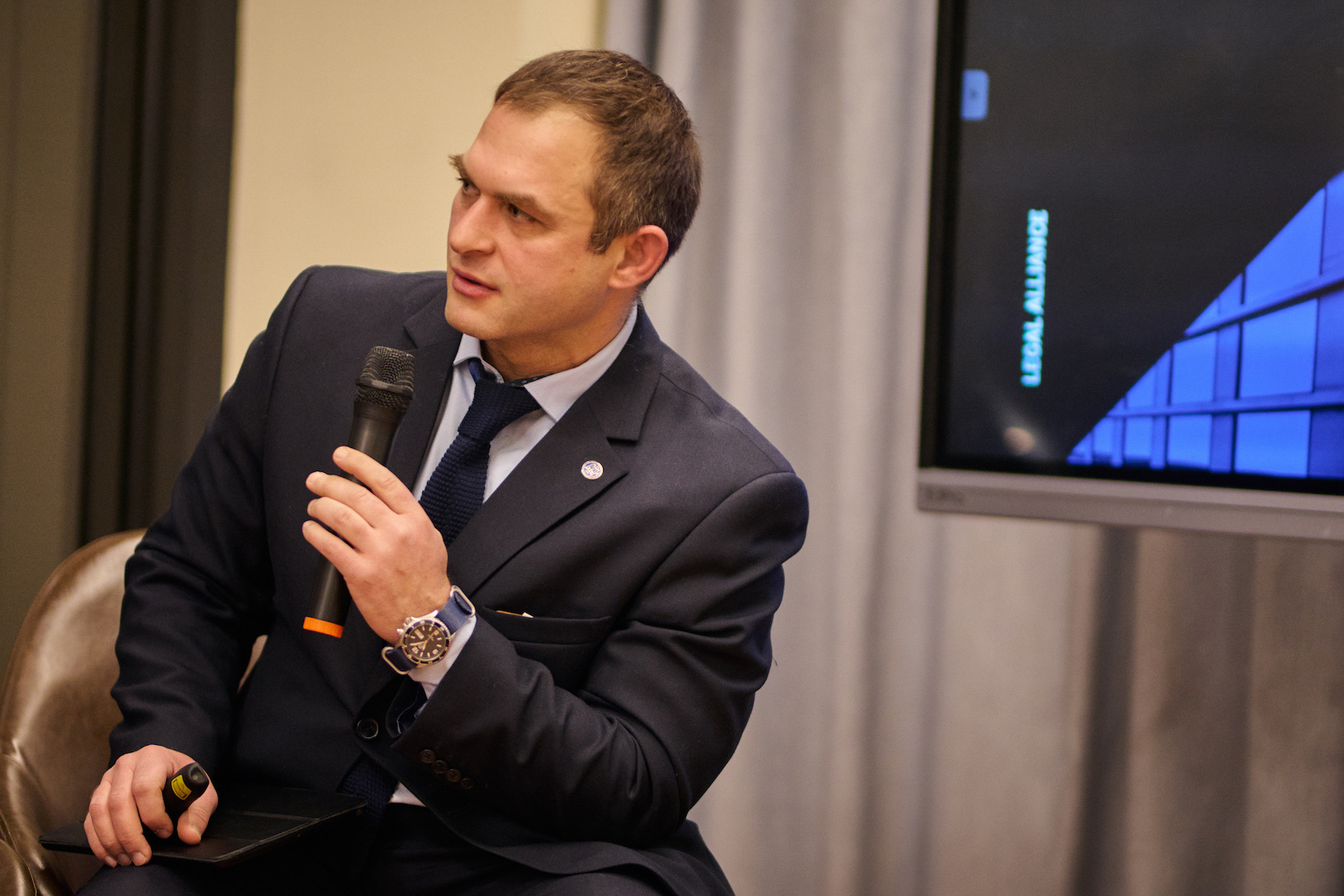
I. Kostin summarized the issues mentioned by his colleagues, as well as outlined the specific causes of the problem of preventing counterfeit medicines trafficking, namely:
The speaker added the parliament was due to pass bill No.5547 at second reading, but it was impossible to say that with the adoption of the bill, there would be fundamental changes to prevent the trafficking of counterfeit medicines. Therefore, it is essential to bear in mind the provisions of international law, having supreme legal force and helping to fill some of the gaps in national legislation. Thus, due to the Medicrime Convention's provisions, the PGO has been able to prove that medicines identified by law enforcement agencies as unauthorized in Ukraine are counterfeit ones.
I. Kostin also stressed that in practice Ukrainian judges do not fully understand the subtlety of the problem of counterfeit medicines due to their lack of specialized knowledge in this area. In view of the foregoing problem, Legal Alliance law firm along with the PGO experts developed guidelines entitled "Medicines: Anti-Counterfeiting in Ukraine," consisting of two parts. The first part was presented at the event. It contains information on the action plan for patients and pharmaceutical companies in case they have found a counterfeit medicine or suspected the medicine authenticity.
In particular, the guidelines provide information on:
It is planned to send these guidelines to patient organizations and law enforcement agencies.
The second part of the guidelines will contain an action plan for law enforcement agencies on the detection of counterfeit medicines, in particular, practical aspects and advice to law enforcement officers on the effective litigation support involving the counterfeiting of medicines.

The event focused on the transformation of Ukraine's intellectual property sector on its path toward European integration.
Improving access to safe and affordable medicines for the Ukrainian population is one of the Government of Ukraine's top priorities. SAFEMed Activity (2017-2025) has supported this effort by appIying health system strengthening best practices.
The Ministry of Health website has posted a notice about the release of a revised draft order of the Ministry of Health ‘On Approval of Amendments to Certain Re
On 25 September, a webinar was held on the topic: ‘180 days of new drug price regulation. Results, prospects and practical advice.’ The event was organized by LA Law Firm in partnership with Proxima Research International.
