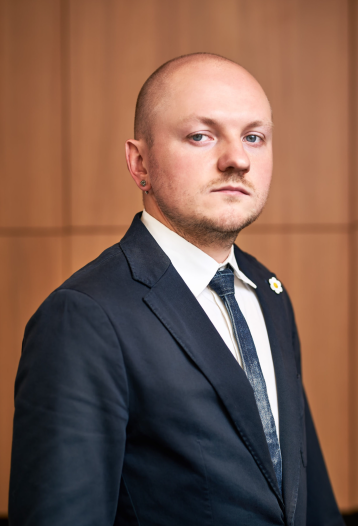
Ilya Kostin, Partner of Legal Alliance Company, Attorney-at-Law, Patent Attorney
On January 23rd, 2017 amendments to the WTO Agreement on Trade-Related Aspects of Intellectual Property Rights (hereinafter - the TRIPS) took effect and introduced the mechanism for compulsory licensing of patented pharmaceutical products, providing access for the countries - members of the WTO which need it, and of needed generic medicinal products produced in other countries. These changes were adopted in the relevant protocol by two-thirds of the WTO members, including Ukraine.
The Law of Ukraine "On Protection of Rights to Inventions and Utility Models", namely, part 3 of Article 30 for many years have been allowing the use of patented technology by a specified person without the patent owner's consent, if such a permission is granted, in particular, to ensure the health of the population. There is a similar rule in part 11 of Article 9 of the Law of Ukraine "On Medicinal Products". The Government is in charge of implementation of the provisions of these regulations and, therefore, the Cabinet of Ministers of Ukraine (hereinafter – the CMU) adopted Resolution "On Approval of the Procedure for the Cabinet of Ministers of Ukraine to Grant Permission to Use a Patented Invention (Utility Model) Related to the Medicinal Product" No. 877 as of December 4th, 2013 (hereinafter - the Procedure).
The whole array of national regulation allows Ukrainian producers to obtain a compulsory license, in the first place, for the domestic market. However, the international standard, the entry into force of which is the reason for writing this article, has provided an opportunity of exporting the drugs produced under a compulsory licensing procedure. Thus, on January 23rd, 2017 changes adopted back in December 2005 came into effect. Article 31 of the TRIPS Agreement came into existence. It provides that the exporting country can issue a compulsory license to produce medicinal products and further export them to the importing country in accordance with certain conditions set out in Section 2 of Article 31 of the Agreement.
In other words, the entry into force of amendments to the TRIPS allows the developed states to issue compulsory licenses to generic pharmaceutical companies for the production of medicinal products, allowing them to export the product to developing countries. This mechanism is very interesting for the domestic pharmaceutical industry.
Experts of Legal Alliance Company were involved in the negotiations between the domestic manufacturer and the company-member of BIG Pharma engaged in the production of medicines against HIV \ AIDS. We are currently working on a case regarding attempts by the patent holder to counteract the preparation of the domestic manufacturer for the production of medicines against tuberculosis (the patent expires in a year and a half).
However, there is always a downside, and we should remember this. Thus, in 2007 Brazil granted a compulsory license for Stocrin (active substance - Efavirenz). In Thailand, in 2007 a compulsory license for Kaletra produced by Abbott company was issued. The above companies-manufacturers of innovative medicinal products announced that in the future they refuse to register new medicinal products in these countries. Unfortunately, I do not have any information on whether they are keeping to their statements.
Why is compulsory licensing so interesting? Firstly, due to price. We know a case when in India in 2012 Indian company Natco Pharma was allowed to produce and sell an analogue of Nexavar at a price that is 3% of the price of the original medicine, and to pay a 6% royalty to Bayer. The difference from the initial price of the drug established by the patent owner – Bayer - was 97%. Secondly, due to social responsibility to the society. There are conditions provided for in the TRIPS Agreement and in the domestic legislation, according to which compulsory licensing of medicines production is possible in cases of emergency and absolute necessity; public non-commercial use; and also when the use is permitted for the purpose of influencing anti-competitive practices.
In general, compulsory licensing of medicines will not be widespread. This is not a license to violate the rights to data exclusivity (during registration) and patent. However, given the intention of the government to reduce the cost of medicines in any way (given the state of the economy, I do not intend to estimate it as positive or negative), despite the interest of innovative companies with their latest developments in the presence in our market, it is possible to initiate compulsory licensing in relation to drugs against HIV \ AIDS, tuberculosis, cancer and others.






The event focused on the transformation of Ukraine's intellectual property sector on its path toward European integration.
Improving access to safe and affordable medicines for the Ukrainian population is one of the Government of Ukraine's top priorities. SAFEMed Activity (2017-2025) has supported this effort by appIying health system strengthening best practices.
The Ministry of Health website has posted a notice about the release of a revised draft order of the Ministry of Health ‘On Approval of Amendments to Certain Re
On 25 September, a webinar was held on the topic: ‘180 days of new drug price regulation. Results, prospects and practical advice.’ The event was organized by LA Law Firm in partnership with Proxima Research International.
