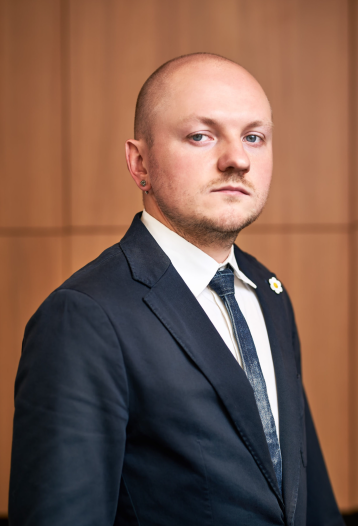
Dmytro Aleshko, partner at Legal Alliance Company
Nataliia Spivak, associate at Legal Alliance Company
Ukrainian Journal For Business Law
The dynamic development of the legislation which regulates the healthcare sector and in particular the pharmaceutical market recently is due to the active process of its harmonization with the legislation of the European Union. It is dynamics that distinguishes this relatively young sphere from among a lot of others.
This year was full of really important events, which directly affected not only representatives of business, healthcare professionals, but also patients. Thus, state program “Affordable Medicines” was introduced to reimburse the cost of certain categories of medicines, a system of selecting essential medicines to satisfy the basic needs of the population who have treatment in healthcare facilities, and the system of public procurement through international specialized organizations were reformed. Furthermore, in the near future a long-term strategy will be adopted to provide the population of Ukraine with pharmaceutical products.
Legal Alliance Company was actively involved in the reform processes in a lot of healthcare sector areas. In recent years we have implemented a lot of norm-setting projects related to the most urgent issues for the pharmaceutical market.
An example of this is the introduction of the state program “Affordable Medicines”, the goal of which is to reimburse the cost of drugs for outpatient treatment of people suffering from cardiovascular diseases, diabetes of type II and bronchial asthma. The program was launched in early April 2017 and has already demonstrated its first positive results. Moreover, its funding for the subsequent period was increased by UAH 200 million. The plans include expanding the list of diseases and chronic conditions, in connection with which patients will be able to receive medicines free of charge or for partial payment.
Thanks to this state program, patients, who have a doctor's prescription, can buy drugs at reduced prices (with patient paying of 1 to 75% of the retail price) or even receive some of them for free. Cost of medicines is reimbursed by pharmacies at the expense of targeted donations from the state budget to local budgets. Interim results of the program demonstrated decrease in the average weighted cost of reimbursable medicines. This became possible due to the introduction of an external and internal mechanism of reference pricing for drugs.
Our experts actively participated in this process at the stage of the regulatory framework development. We are talking about Resolution of the Cabinet of Ministers of Ukraine “On State Regulation of Prices for Medicines” No. 862 as of November 9th, 2016 and Resolution “On Introducing Reimbursement for the Cost of Medicines” No. 863 as of November 9th, as well as on subsequent amendments to them.
I cannot say that the norm-setting process is completely in line with the plan and corresponds to the stated timeframes. In practice, the mechanisms used to solve the set tasks can be radically changed following numerous meetings, brainstorms and round tables. Lawyers working on the regulatory framework, as a rule, participate in the discussion and development of a strategy for achieving the desired result, recommend possible ways to resolve issues inevitably arising in the course of the work. Sometimes there is a need to amend the recently approved regulations urgently. A lot depends on the quality of the established communication between all participants of the process.
Any large-scale reform at the first stages of its implementation raises a lot of questions. Now it is happening to the National List of Essential Medicines. Since mid-2015 our company as a legal adviser has supported the process of reforming the model of the formation and functioning of the National List, a list of drugs to satisfy priority medical care needs of the population being in healthcare facilities for treatment at the expense of state and local budgets.
A model of reform was the World Health Organization's international practice of creating its Model List of Essential Medicines. This list is the basis for many developing countries. The work on reform, in particular, included formation of an expert body for the transparent selection of essential medicines, which are high-quality, effective and safe drugs of high economic feasibility, and the construction of a model for the selection of essential medicines. In general, more than ten by-laws were developed and subsequently approved.
In 2018, healthcare institutions and facilities financed from state and local budgets will have to procure drugs in accordance with the new National List. From January 1st, 2018, subject to satisfying 100% need in medicines included in the National List, customers in the regions will be able to procure any other drugs registered in Ukraine, the need in which they will determine independently. In this case, preference should be given to medicines included in industry standards in the field of healthcare.
Let me note that today in Ukraine a significant share of medicines is procured centrally by the Ministry of Health through international specialized organizations. Such procurement is not limited to the National List, thus patients, as before, will have access to the drugs they need, which are obtained through government programs.
The introduction of the National List is not a question of the number of drugs on the list and the inclusion or non-inclusion of some specific positions in it. This is a matter of providing 100% of patients undergoing inpatient treatment with at least all basic essential medicines. This applies to every Ukrainian. For citizens the introduction of the National List means that quality and safe key medicines of proven effectiveness that have been recognized as a priority for Ukraine should be provided free of charge from the beginning of 2018. This means reducing costs from the “pocket” of consumers and improving the quality of medical care.
Together with the work on the National List, our company has long been providing legal support to prepare regulatory legal acts in the field of public procurement of medicines and medical products with the involvement of international specialized organizations. Such activities are carried out in cooperation with the United Nations Development Program.
Thus, in 2015, Ukraine decided to delegate a part of the procurement from the Ministry of Health of Ukraine to UN agencies (the United Nations Development Program, the United Nations Children's Fund) and Crown Agents, British procurement agency. This practice is applied in countries where a transparent and effective national procurement model is not yet established. In our country, this step was the result of a long practice of non-transparent procurement procedures, high prices for goods, lobbying the interests of certain players in the pharmaceutical market and the absence of a separate special legislative regulation for the procurement of such socially important goods as pharmaceutical products. In addition, the existing system of public procurement did not allow the Ministry of Health to fully perform its functions to carry out systemic and comprehensive healthcare system reform, the need for which has long been overdue in Ukraine.
It was not easy to launch international procurement of medicines and medical products with the involvement of international specialized organizations. Lawyers of Legal Alliance from the very beginning of the preparation of regulations were invited to cooperate. Since Ukraine had no any such previous experience, it was necessary to form a model that would legislatively allow for procuring high-quality medicines for Ukrainian patients at adequate prices from the scratch.
Centralized procurement in accordance with the internal rules and procedures of international specialized organizations made it possible to reduce corruption risks significantly. Changes in the Tax Code of Ukraine and a number of by-laws allowed for exempting such operations from value added tax. Data available in open sources indicate that the procurement of medicines and medical products through international specialized organizations, as interim mechanism, has demonstrated significant savings of budgetary resources.
The introduced mechanism for the procurement of medicines and medical products with the involvement of international specialized organizations is a temporary solution to the urgent problems. Together with its implementation, Ukraine needs to develop and implement local procurement mechanism, which will be effective and lead to the achievement of the set goals.
Moreover, as regards norm-setting practice, our work was quite fruitful in the framework of interaction with WHO experts in drafting the State Strategy for the Implementation of the State Policy in the Sphere of Provision of Population with Medicines for 2017-2025. In the near future it must be approved in Ukraine. In addition, in 2012-2014 in the framework of collaboration with the profile association for medical products, Legal Alliance participated in the preparation of amendments to various resolutions of the Cabinet of Ministers of Ukraine and orders of the Ministry of Health of Ukraine regulating the activities of operators of the medical products market.
In 2014-2015 our team also performed extensive work on drafting the Law of Ukraine “On Medicines”, which was registered in the Parliament. The European model for regulating the turnover of medicines was used as a basis for the draft law, in particular, as stipulated in the EU Directive 2001/83. Since this act does not cover the full range of necessary issues, separate sections of the draft law were developed taking into account experience of the countries of the European Union. Certainly, the peculiarities of the pharmaceutical market functioning in Ukraine were considered as well. The draft law was assessed by experts of the World Health Organization. Given harmonization of Ukrainian legislation with EU legislation, I am confident that our country will again consider the issue of adapting one of the basic laws of the industry, and therefore the bill that we drafted will regain its relevance.
On the whole, norm-setting is a complex process and it requires that lawyers get fully involved in both technical and a specialized issues. In the healthcare sector this means having medical and pharmaceutical knowledge, finding alternative ways to solve problems, often balancing between ensuring patient rights, interests of the state and business opportunities.






The event focused on the transformation of Ukraine's intellectual property sector on its path toward European integration.
Improving access to safe and affordable medicines for the Ukrainian population is one of the Government of Ukraine's top priorities. SAFEMed Activity (2017-2025) has supported this effort by appIying health system strengthening best practices.
The Ministry of Health website has posted a notice about the release of a revised draft order of the Ministry of Health ‘On Approval of Amendments to Certain Re
On 25 September, a webinar was held on the topic: ‘180 days of new drug price regulation. Results, prospects and practical advice.’ The event was organized by LA Law Firm in partnership with Proxima Research International.
