"Apteka Weekly ", No. 25 (1196) dated of July 1, 2019
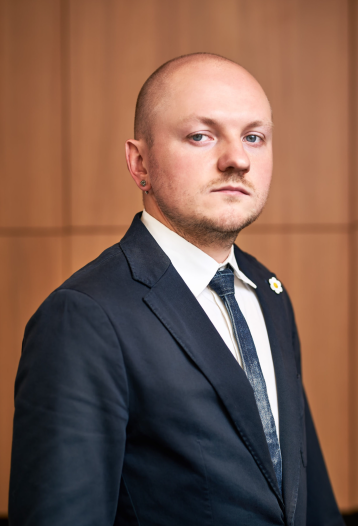
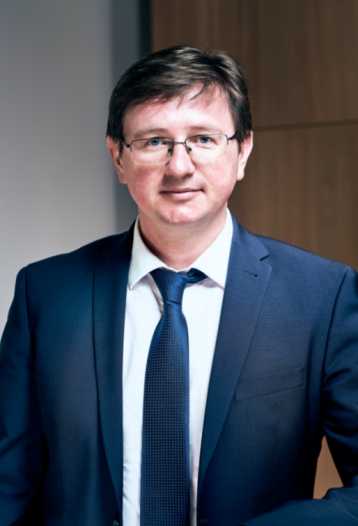
On June 22, 2019, the seminar “Language Law: Changes in Company Activities” was held. The organizer of the event was Legal Alliance Company, and the speakers were Natalia Abramovych, attorney-at-law at Legal Alliance Company, Natalia Lavrenova, attorney-at-law, mediator, associated partner at Legal Alliance Company, and Illya Kostin, partner, attorney-at-law at Legal Alliance Company. During the seminar, they discussed how the provisions of the language law affect the business processes of companies, what needs to be changed now, and what the consequences the violation of the norms of so-called language law might be?
As it is known, on May 15, the President signed the Law of Ukraine “On Ensuring the Functioning of the Ukrainian Language as the State Language” (hereinafter – the language law). Undoubtedly, this law is important for Ukrainian statehood, and it requires the introduction of changes to some business processes. In order to clarify the main legal aspects of this issue, Natalia Lavrenova introduced the general aspects of the language law to the participants.
What areas does the language law apply to?
First of all, Natalia Lavrenova drew the attention of listeners to the fact that the language law applies to the public sphere, which includes healthcare, labour relations, education and science, culture, the activities of the media, computer programs, websites, mobile applications, advertising and customer service.
“Here it is worth dwelling on the aspect of labour relations, because in practice we sometimes encounter the fact that some documents are kept in Russian, for example, labour agreements and job descriptions. We recommend attention be given to this fact, because, according to the language law, these documents must be written in Ukrainian. However, this does not prohibit writing bilingual agreements,” the speaker noted.
In turn, the subjects of the language law are:
- state and local government authorities;
- state and communal enterprises, institutions and organizations;
- legal entities of private ownership and individuals (in public sectors of community life).In this context, it is worth paying attention that the language law does not apply to the sector of private communication and religious practices.
When does the language law enter into force?
The language law will enter into force on July 16, 2019, with the exception of the provisions indicated in the following table.
Table. The aspects for the implementation of which allotted additional time:
6 months - The state language in advertising.
1 year - The state language in healthcare; in technical and project documentation.
18 months - The state language in consumer service.
3 years - The state language in the interfaces of computer programs installed on goods; in the Internet.
Features of communication with state government authorities
The language law stipulates that state and local government authorities, enterprises, institutions and organizations of state and communal ownership accept documents for consideration written in the state language.
“The aspect that all documents are accepted by state government authorities only in Ukrainian is related to several issues, which, in our opinion, can be resolved by providing additional clarifications to the language law. The thing is that there are two possible approaches in this aspect.
The first one is that the documents which are directly considered and / or approved by the state government authority (for example, a statement on the state registration of a medicine, instructions for use, packaging of a medicine and marking for it, quality control methods) should really be written in Ukrainian language.
However, the question arises regarding other documents, which are also part of the application for registration of a medicine and are contained in the modules of the registration dossier (for example, preclinical and clinical studies). Can these documents be submitted in English? After all, they are the intellectual property of the manufacturer. As lawyers, interpreting the language law, we understand that no exceptions are provided for in this aspect,” Natalia Lavrenova explained.
On this occasion, the State Expert Center of the Ministry of Health of Ukraine and the Ministry of Health of Ukraine should form their opinion.
Requirements for proper names and names
The language law provided that trademarks (marks for products and services) may be used in the form in which they are granted legal protection. Considering this provision, it is important to understand its interaction with another requirement of the language law that all information about a product (among other things its name) for the consumer should be provided in Ukrainian.
If a product name is a trademark in a foreign language, it must be duplicated in the state language.
The state language should also indicate the followings:
- official names of state and local government authorities, enterprises, institutions and organizations of communal ownership;
- surnames, names and middle names of the citizens of Ukraine;
- geographical names, names of toponymy’s objects.
Consumer Service Rules
Rule No. 1. The provision of the language law on consumer service in the state language applies to all commercial entities, including individuals – entrepreneurs.
“All commercial entities that operate on the territory of Ukraine, realizing products and services, must provide information about a product or a service in Ukrainian,” commented Natalia Lavrenova.
Rule No. 2. Requirements for the use of the state language include:
Rule No. 3. The following types of information should be submitted in the official language:
Natalia Abramovych described how the theoretical aspects of the language law are superimposed on practice, and presented to the participants the most common questions that arise about this.
1. Workflow.
As mentioned before, state and local government authorities, enterprises, institutions and organizations of state and communal ownership accept documents for consideration in the state language.
“The law does not stipulate any requirements as to whether the document drawn up in Ukrainian should be original, it is possible to submit bilingual documents, or with translation,” the speaker noted.
2. Advertising.
The language law provides that the language of advertising in Ukraine is the state language. It is important to understand that this provision applies to all types of advertising, namely:
- print mass-media;
- electronic media;
- television and radio broadcasting;
- public events (conferences, seminars, etc.);
- printed materials (promotional coupons, catalogs, brochures, etc.);
- sponsorship.
3. Marking.
“The legislation does not always establish the relevant requirements for product marking. In this regard, it must be remembered that the language law is universal and imposed through the prism of special legislation for a particular type of product,” Natalia Abramovych explained.
The speaker voiced 3 options for regulating the marking process, which depend on the type of product and the corresponding legal regulation:
In turn, the language law states that in consumer service, product information should be indicated in the state language, and its scope should be no less than that provided for by the Law of Ukraine “On Protection of Consumer Rights” (Article 15). It is a matter of indicating a number of points, including the name of a product, storage conditions, expiration date, address of a manufacturer and so on.
However, it should be noted that the Law of Ukraine “On the Protection of Consumer Rights” does not contain a requirement to indicate all the information on the product’s label or in product marking. This law provides for the following permissible locations for the placement of necessary information:
- in the accompanying documentation attached to the product;
- on the product label;
- in product marking;
- placement in places of product realization;
- placement by distance connection means (upon consumer’s consent);
- in another way (in an accessible visual form).
4. Computer programs and mobile applications.
The speaker noted that the language law contains two separate rules regarding computer programs. The first one concerns programs that directly, separately from devices, constitute a full product.The second case concerns the programs that are released along with devices (computers, phones, etc.).
In the first case, the computer program must have user interface in the state language and / or in English, or other official languages of the member countries of the European Union.
In the second case, the computer program must have user interface in the state language, which in scope and content should contain no less information than foreign-language versions of such user interface.
In turn, mobile applications of commercial entities realizing products and services in Ukraine must also have user interface version in the state language.
It should be noted that the language law provides an exception when user interface may not be submitted in the state language (however, subject to the availability of the English version). This applies when:
- specialized scientific, technical, medical and diagnostic equipment, other specialized professional equipment that are not consumer products;
- software for such equipment;
- specialized software intended for use only in information technology.
5. Websites and social networks.
The language law differentiates the requirements for websites and social networks depending on whether commercial entities are registered in Ukraine or not.
So, for commercial entities realizing products and services and are registered in Ukraine, the following requirements are put forward:
- websites and web-pages on social networks should be submitted in the state language;
- versions in other languages may exist as well;
- the scope and content of the Ukrainian language version should not be less than the version in another language;
The Ukrainian version should be loaded by default.
In turn, commercial entities realizing products and services and have subsidiaries, branches, and representative offices in Ukraine have the following requirements:
- websites in the state language should contain sufficient information and content for easy navigation and disclosure of the purpose of the company;
The Ukrainian version should be loaded by default.
State control and responsibility
In the next block of the seminar, Illya Kostin explained how and who exactly will carry out state control to comply with the requirements of the language law.
Therefore, state control over the use of the state language will be carried out by the Commissioner for the Protection of the State Language (hereinafter - the Commissioner). The scope of his authority includes:
- monitoring the implementation of legislation on the state language;
- consideration of complaints of individuals and legal entities on compliance with the requirements of legislation on the state language;
- drawing up protocols and penalties.
The basis for state control will be:
- a complaint about a violation of the requirements of the language law and the removal of obstacles and restrictions on the use of the state language;
- the Commissioner's own initiative.
The speaker drew special attention of the listeners to the fact that prosecution for non-compliance with the requirements of the language law when serving consumers will be carried out in several stages:
1. Implementation by the Commissioner of state control.
2. Drawing up an act based on the results of state control.
3. The announcement of the warning and the requirement to remedy the violation within 30 days.
4. Preparation by the Commissioner of the protocol (in case of repeated violation during the year).
5. Decision of the Commissioner to impose a fine of 300-400 the tax-free minimum incomes of citizens.
In this context, it is important to understand that the provision on the consideration of claims and the implementation of state control by the Commissioner comes into force in 6 months from the day a candidate is appointed to this position.
Illya Kostin also talked about what kind of administrative responsibility will be imposed for violating the requirements of the language law:
- repeated failure to comply with the requirements of the Commissioner at state control – 100-200 the tax-free minimum incomes of citizens;
- violation of requirements regarding the language of computer programs, sites, advertising, etc. – 200-300 the tax-free minimum incomes of citizens or warning;
- repeated violation of requirements regarding the use of the state language during the year – 500-700 the tax-free minimum incomes of citizens.
The provisions on administrative responsibility provided for by the Code of Ukraine on Administrative Offenses will enter into force on July 16, 2022.
Contact the authors:
Illya Kostin, attorney-at-law, partner of Legal Alliance Company, kostin@l-a.com.ua;
Nataliia Lavrenova, attorney-at-law, mediator, associated partner of Legal Alliance Company, lavrenova@l-a.com.ua;
Nataliia Abramovych, associate of Legal Alliance Company, abramovych@l-a.com.ua.





The event focused on the transformation of Ukraine's intellectual property sector on its path toward European integration.
Improving access to safe and affordable medicines for the Ukrainian population is one of the Government of Ukraine's top priorities. SAFEMed Activity (2017-2025) has supported this effort by appIying health system strengthening best practices.
The Ministry of Health website has posted a notice about the release of a revised draft order of the Ministry of Health ‘On Approval of Amendments to Certain Re
On 25 September, a webinar was held on the topic: ‘180 days of new drug price regulation. Results, prospects and practical advice.’ The event was organized by LA Law Firm in partnership with Proxima Research International.
